Alex Henderson
Journalist, Political Reporter, Cultural Critic, Editor/Proofreader
Alex V. Henderson
Philadelphia, PA
vixenatr

- Home
- Articles on Political, Social, Legal and Business Topics

- Political Commentaries
- Arts & Entertainment
- Bios For Record Companies: Rock
- Bios For Record Companies: Jazz Instrumentalists
- Bios for Record Companies: R&B and Hip-Hop
- Bios For Record Companies: Jazz Vocalists
- Liner Notes, Jazz Instrumentalists
- Liner Notes: Jazz Vocalists
- Magazine Articles: Jazz
- Magazine Articles: R&B
- Liner Notes: R&B
- Liner Notes: Hip-Hop
- CD Reviews
- Travel Photos
- Technical Writing
- Blogs
- Links
The New York City Jazz Record,
April 2015
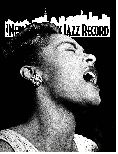 On the Cover
Billie Holiday: Year of Lady Day
By Alex Henderson
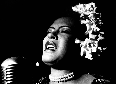
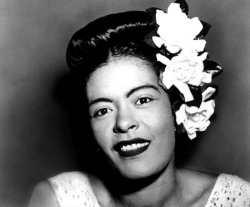
56 years have passed since the death of Billie Holiday, who was only 44 when she died Jul. 7th, 1959. Were she still alive, Lady Day would be celebrating her 100th birthday on Apr. 7th—and a wide variety of activities are taking place as part of the centennial celebration. These include not only Holiday-themed concerts and lectures, but also a new book (John Szwed’s Billie Holiday: The Musician and the Myth; see review on pg. 38) and vocal tribute albums such as Cassandra Wilson’s Coming Forth by Day (Legacy; see review on pg. 32), Molly Johnson’s Because of Billie (Universal), Annie Ross’ To Lady with Love (Red Anchor) and José James’ Yesterday, I Had the Blues: The Music of Billie Holiday (Blue Note). Meanwhile, pianist Lara Downes explores Holiday’s repertoire from a solo piano perspective on A Billie Holiday Songbook (Steinway & Sons) and SonyLegacy is releasing The Centennial Collection, which focuses primarily on Holiday’s Columbia output but also contains her 1944 recording of “Lover Man” for Decca Records and the 1939 ballad “Strange Fruit” (a sobering description of lynching in the Deep South). Although Lady Day was born in Philadelphia and spent part of her childhood in Baltimore, she was living in Harlem by the late ‘20s. Centennial events are being held in three Harlem venues where Holiday herself performed: before headlining the Apollo Theater for a Holiday-themed concert on Apr. 10th, Wilson will be part of an Apr. 6th ceremony in which Holiday is posthumously inducted into the Apollo Walk of Fame; at the revived Minton’s, JC Hopkins’ Biggish Band will pay tribute to Holiday’s work with the Count Basie and Teddy Wilson big bands and Queen Esther will sing Holiday repertoire; and at Bill’s Place, vocalists Antoinette Montague and Cynthia Scott pay tribute. The inclusion of “Strange Fruit” on a Columbia-affiliated release like The Centennial Collection is ironic since in 1939 Columbia refused to release the song— which is why it came out on Milt Gabler’s Commodore Records instead. With its candid discussion of racial oppression in the U.S., it was way ahead of its time.
Singer Lorraine Feather, who is the daughter of late jazz critic Leonard Feather, remembers meeting Holiday in her parents’ living room when she was a child. “I have marveled many times that a song about such a devastating and shameful truth could have existed in her repertoire and became her biggest-selling record. I’m glad she was brave enough to record it and Milt Gabler brave enough to release it on Commodore. There have been many rock stars who’ve been considered outlaws for the way they dressed or behaved. In my opinion, none of them did anything as radical as Billie Holiday did when she stood on the stage of Café Society and sang a song about lynching.”
Many of the musicians who knew Holiday remain active on the NYC jazz scene, including Ross, who recalls that she had a serious case of stage fright when, in the early ‘50s, she was hired to replace Holiday at a concert at the Apollo. “I was sitting at my dressing table absolutely shaking,” the 84-year-old Ross recalls, “and Duke Ellington came in. He said, ‘What’s the matter?’ I said, ‘I’m so frightened.’ Duke said, ‘Have you ever met Lady?’ I said, ‘No. I think that if she said anything derogatory, I really would die.’ Duke said, ‘Nonsense.’ And Duke took me by the hand and took me down to Lady’s dressing room. I think she was having some trouble with her teeth, or maybe there was an altercation. I don’t know. But her jaw was swollen. And she was so sweet. Lady said, ‘Have you got a gown? Do you have a pianist? You can borrow mine if you want.’ She had Mal Waldron at the time. The moment of truth arrived and Duke said, ‘Ladies and gentleman, I’m sorry to inform you that Billie Holiday will not be on the first show. But we have a new singer.’ It was baptism by fire.”
Holiday was also on very friendly terms with singer Helen Merrill during the ‘50s. Merrill, now 84, fondly remembers performing the standard “You Go to My Head” with Holiday in Leonard Feather’s Manhattan apartment in 1956. “Leonard Feather used to have wonderful parties in his home,” Merrill explains. “Billie would always be there. I would be there, too. And we did that now-infamous duet, ‘You Go to My Head’, which, of course, was done on a home tape recorder. Billie and I were just having fun at a party. She was teaching me how to end a song because I’m notorious for never knowing how to end a song.” Merrill admired Holiday’s work long before they became friends and she still has vivid memories of hearing her perform “Strange Fruit” in Greenwich Village in the early ‘50s.
“To this day, I’m really rather numbed by the hypnotizing performance of ‘Strange Fruit’ that I heard,” Merrill asserts. “Billie just stood there, not moving a limb. And her face was without expression. But it was so moving.”
Veteran jazz singer Sheila Jordan, now 86, continues to offer some Holiday-associated songs in her repertoire after many years and she still marvels over how personal Holiday’s improvisations were. “Billie had a way of improvising that was so natural that for the longest time, I would think that was the way the tune was written,” Jordan notes. “And that’s why I tell the singers today: be very careful if you’re listening to Billie Holiday. The way she sings and the way she improvises is so natural that you have no idea it’s an improv. That’s how graceful and how musical and natural her improvisations were. So what Billie Holiday taught me was to go and get the original music and learn the original melodies. I’ll never forget that.”
Holiday is also fondly remembered by the instrumentalists she worked with, including baritone saxophonist Joe Temperley (who toured the UK with her in the late ‘50s when he was in drummer Jack Parnell’s band). The 85-year-old Temperley comments: “I loved Billie Holiday. She was wonderful. But it was a different time and she was hounded to death. It was a different era. She would be accepted now. Her album Lady in Satin was just beautiful. Heartbreaking.”
Holiday’s influence on so many singers who weren’t born until the ‘70s or later underscores the longevity of her work. One of her younger admirers has been Sarah Elizabeth Charles, who will be appearing at the Celebrating Lady Day gathering at the Rose Theater, Apr. 10th-11th, along with Andy Bey and Molly Johnson. Asked why Holiday’s work resonates with vocalists who were born long after her time, Charles responds: “When you have such a distinctive sound and such a strong conviction in what you’re trying to convey, it comes through—and I think that’s why her music has had such longevity. People connect with the emotion in her singing, first and foremost.”
The Ontario, Canada-based Johnson notes that during the Centennial, she plans to honor Holiday’s memory by making generous charitable donations to the Boys & Girls Clubs. Johnson explains: “My contribution to Billie Holiday and the Centennial is to speak loudly and clearly about the strength and integrity and intelligence of that woman. That’s number one. Number two is to make as much money as I can make and plow it into the Boys & Girls Clubs of North America. And the reason for that is that Billie had no childhood.”
Wilson, reflecting on the Centennial and her new album, observes, “Coming Forth by Day is an homage dedicated to the beauty, power and genius of Billie Holiday. A collection of musical spells, prescriptions for navigating the dubious myths surrounding her life and times, this record is a vehicle for the re-emergence of Billie’s songbook in the 21st Century.”
Shenel Johns, among the vocalists who will perform at the “Billie and the Boys” event at Dizzy’s Club Apr. 9th-12th, asserts that Holiday’s long-lasting appeal comes down to the fact that the lyrics she performed in the ‘30s-50s are still relevant today. “Billie was relatable,” Johns stresses. “Whether she was talking about love lost or depicting visuals of racism and slavery down south, you knew what she was talking about. She taught singers how to perform and connect with audiences. It’s one of our most important jobs to create an atmosphere and to tap into your feelings and she did it gracefully while still being raw and uncut. That edge is something that people are drawn to, especially vocalists. It’s not easy being vulnerable and she was always musically vulnerable. She was real, not pretending to be anything but herself.”
For more information, visit billieholiday.com. Holiday tributes are at Zeb’s Apr. 6th; Minton’s Tuesdays and Apr. 10th, 11th, 18th, 24th, 25th; Dizzy’s Club Apr. 9th-12th; Apollo Theater Apr. 10th; The Appel Room Apr. 10th-11th; Rose Theater Apr. 10th-11th; Bill’s Place Apr. 10th-11th; Jazz at Kitano Apr. 10th; and Harlem Stage Gatehouse Apr. 30th. See Calendar.
Recommended Listening:
• Billie Holiday—Lady Day: The Complete Billie Holiday on Columbia (Sony/Columbia, 1933-44)
• Billie Holiday—Rare Live Recordings (ESP-Disk, 1934-59)
• Billie Holiday—Lady Day (The Sixteen Original Commodore Interpretations) (Commodore, 1939/1944)
• Billie Holiday—The Complete Decca Recordings (Decca-GRP, 1944-50)
• Billie Holiday—The Complete Billie Holiday on Verve (Verve, 1945-59)
• Billie Holiday—Lady in Satin (Columbia, 1958)

Alex V. Henderson
Philadelphia, PA
vixenatr