Alex Henderson
Journalist, Political Reporter, Cultural Critic, Editor/Proofreader
Alex V. Henderson
Philadelphia, PA
vixenatr

- Home
- Articles on Political, Social, Legal and Business Topics

- Political Commentaries
- Arts & Entertainment
- Bios For Record Companies: Rock
- Bios For Record Companies: Jazz Instrumentalists
- Bios for Record Companies: R&B and Hip-Hop
- Bios For Record Companies: Jazz Vocalists
- Liner Notes, Jazz Instrumentalists
- Liner Notes: Jazz Vocalists
- Magazine Articles: Jazz
- Magazine Articles: R&B
- Liner Notes: R&B
- Liner Notes: Hip-Hop
- CD Reviews
- Travel Photos
- Technical Writing
- Blogs
- Links
The New York City Jazz Record,
October 2015
Interview:
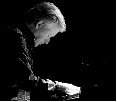
Alan Broadbent
By Alex Henderson
For many years, Alan Broadbent was closely identified with the Los Angeles jazz scene. The acoustic pianist, who grew up in New Zealand, moved to Boston in 1966 to attend the Berklee College of Music—and after three years on the road with Woody Herman’s big band, settled in L.A. in 1972.
Along the way, Broadbent became known for his arranging and composing as well as for his lyrical bop pianism. It was on the West Coast that, in addition to his own albums, he worked as a sideman for artists ranging from saxophonists
Gary Foster, Bud Shank and Warne Marsh to singer Irene Kral. Broadbent is perhaps best known, however, for his work with singers Natalie Cole and Diana Krall and for his contributions to bassist Charlie Haden’s Quartet West. But
after 39 years in L.A., Broadbent moved to Nyack, NY in 2011 and these days can be found teaching at New York University in addition to his performances throughout the
city. During a recent interview, the 68-year-old Broadbent discussed his many accomplishments.
The New York City Jazz Record: What were your reasons for leaving Los Angeles four years ago?
Alan Broadbent: Too many. A lot of things. But I’ve loved New York City all my life. I had the opportunity
to move here with my wife and son and I took it. We live north of New York City about 40 minutes by train
in a place called Nyack.
TNYCJR: Which is relatively convenient to Manhattan.
AB: Yeah, at the moment. We’re going to try to move a little closer so that it isn’t quite such a long haul. If
we’re going to be New Yorkers, at least in name, we need to be a little closer. But at least in Nyack, I can go into New York City whenever I want and catch the vibe.
TNYCJR: You were a fixture on the West Coast for many years.
AB: What’s a fixture? There were no jazz gigs, really. There was a little bit of studio work. The jazz scene in
Los Angeles leaves a lot to be desired. There are no clubs, basically. I would play a club in Los Angeles and three people would show up. They would sit in front of
the piano, eat their spaghetti and yap the whole time. That, to me, is not the jazz experience.
TNYCJR: So you’re happy to be living on the East Coast?
AB: I’m absolutely happy. Things have turned around for me. I’m appreciated here. It’s good to be a part of New York City and my wife is from Philadelphia. She’s an East Coast girl. And we wanted our son to grow up here with some culture.
TNYCJR: Jazz in Los Angeles is so spread out compared to NYC, where it’s easy to get from club to club. Mezzrow, for example, is within walking distance of
half-a-dozen other jazz clubs.
AB: I play duo this month at Mezzrow, Spike Wilner’s
lovely place with a beautiful piano. The place is packed. Way in the back, there might be somebody talking at the bar. But everybody’s attention is on you. And that’s
what I’m talking about: people in New York City come out to hear live jazz. They come out to listen... We can’t all work Birdland. We can’t all work the big clubs. But we still have to play. The thing about jazz is that you have to play to keep that connection with each other
going. And I’m limited because I don’t play keyboards. I play the piano. A lot of the smaller places don’t have real pianos and they expect you to bring a keyboard—
which I won’t do. For me, the piano is a very personal means of expression. I’ve played it since I was six years old and I don’t go to the piano only to play notes. I go
there to express something, which I just can’t do on an electric piano that wants me to play the sound it wants. When I play the piano, I get my sound.
TNYCJR: So you won’t be playing any electric keyboards during your live performances?
AB: I never will. It’s a question of feeling. For a pianist
like Bud Powell, the connection between his technique
and his feeling and his touch on the piano—they were all of a piece. You can’t do that on an electric piano. If I
play a C on the electric piano and somebody else plays a C on the electric piano, it’s going to be the same C. But if you hear Bud Powell, Oscar Peterson and George
Shearing playing the C on the piano, all of those Cs are going to be different.
TNYCJR: You’ve recorded in a variety of settings over
the years, from trios to big bands to solo piano. One of
your more recent albums is America the Beautiful with the NDR Bigband [Jan Matthies Records].
AB: It’s the same guy on all of those albums. Working
with NDR, the big band from Hamburg, Germany,
represents the composer side of me. And obviously, the
solo piano is the improviser side of me—the guy who jumps off the cliff and hopes he can fly. It’s a question
of economics as well. I haven’t been with a record company for the past 10, 15 years. I do it all myself
now. I schlep my CDs down to the post office in Nyack and mail them off. Anything to keep my music
available. Record companies don’t exist like they used to. But I do a bit of writing and that sustains me.
TNYCJR: It’s interesting that your album with NDR is called America the Beautiful since the participants are a pianist originally from New Zealand and a big band
based in Germany.
AB: (laughs) Yeah. The America that I know—the
America that invited me to this country when I was 19 and gave me my jazz education and gave me a life—that’s the America the Beautiful that I know. This country has given me a life. So why shouldn’t it be
beautiful?
TNYCJR: You have a strong rapport with singers.
AB: I’m not sure that I do. Singers hire me, but I listen to
singers like I listen to horn players—and I accompany
them that way.
TNYCJR: You’ve worked with Natalie Cole, Irene Kral,
Diana Krall and Sheila Jordan.
AB: They’re exceptional people. I wrote some of my most beautiful arrangements for Natalie. I did three CDs with her—that was before the whole music business tanked.
I’m very proud of the work I did on those albums. But I’ve
known those songs since I was a boy. When I write an
arrangement for “Stardust”, at least I can sprinkle a little stardust through Natalie’s vocals. And when I accompanied Irene, her phrasing was so impeccable that I could paint
unusual chords and progressions that wouldn’t faze her.
There are plenty of singers who, if you play a chord out of
their experience, it throws them off. But I gravitate to the singers who are musicians, especially somebody like Diana Krall. A lot of people miss the point about Diana. Whatever her voice is doing, listen to where Diana is putting those notes. It is the most swinging phrasing you
will hear from anybody alive today.
TNYCJR: You have played with your share of legendary
instrumentalists as well. Bud Shank, for example.
AB: Bud was another guy who worked his butt off to
promote jazz. Bud was always about featuring young
people. Bud came out of the studio situation in Los Angeles
and he was one of the guys who was doing jazz scores in
Hollywood. He was right there. He made a fair amount of
money doing that, then retired from the studios and came
back to jazz as a recording jazz musician.
TNYCJR: One of your most famous associations was
Charlie Haden’s Quartet West with saxophonist Ernie
Watts. It was an unusual group, with the way it integrated
excerpts from old ‘40s and ‘50s movies into the albums. It
was jazz meets film noir.
AB: That concept kind of came after the fact. It was never invented. Record companies found a niche for us and we went with it. People asked me about that style of film noir in my writing for the Quartet West and I would say, “Sorry,
folks, that’s just the way I write. I’m not intentionally trying to be a film noir writer or a film noir artist—I write that way and I feel that way. But if you want to label it film
noir, that’s fine.” I was born way after my time, anyway.
The Quartet West’s most popular album, Haunted Heart,
sold close to 40,000 copies, which for a jazz record was pretty good.
TNYCJR: In many interviews, you have stressed that for
you, jazz is ultimately about feeling—not pyrotechnics.
AB: That’s what we’re trying to get. Louis Armstrong in 1933 singing “Dinah”—that’s what jazz is right there.
TNYCJR: His work still resonates with people.
AB: And why? Because of the feeling. Why Lester Young?
Because of the feeling. Charlie Parker, Sonny Rollins—because of the feeling. There’s the old story of the saxophone player running up and down the scales on the
bus and Lester Young said, “I know what you can play. Now, tell me a story.” That’s what I’m trying to do when I play the piano: tell a story.
For more information, visit alanbroadbent.com. Broadbent
is at Mezzrow Oct. 16th-18th. See Calendar.
Recommended Listening:
• Charlie Haden—Quartet West (Verve, 1986)
• Alan Broadbent—Live at Maybeck Recital Hall,
Volume Fourteen (Concord, 1991)
• Alan Broadbent—Personal Standards (Concord, 1996)
• Lee Konitz (with Alan Broadbent)—Live-Lee/More Live-Lee (Milestone-Fantasy, 2000)
• Alan Broadbent—Live at Giannelli Square: Volume 1
(Chilly Bin, 2010)
• Alan Broadbent—Just One Of Those Things (Edition Longplay, 2013)

Alex V. Henderson
Philadelphia, PA
vixenatr